Introduction
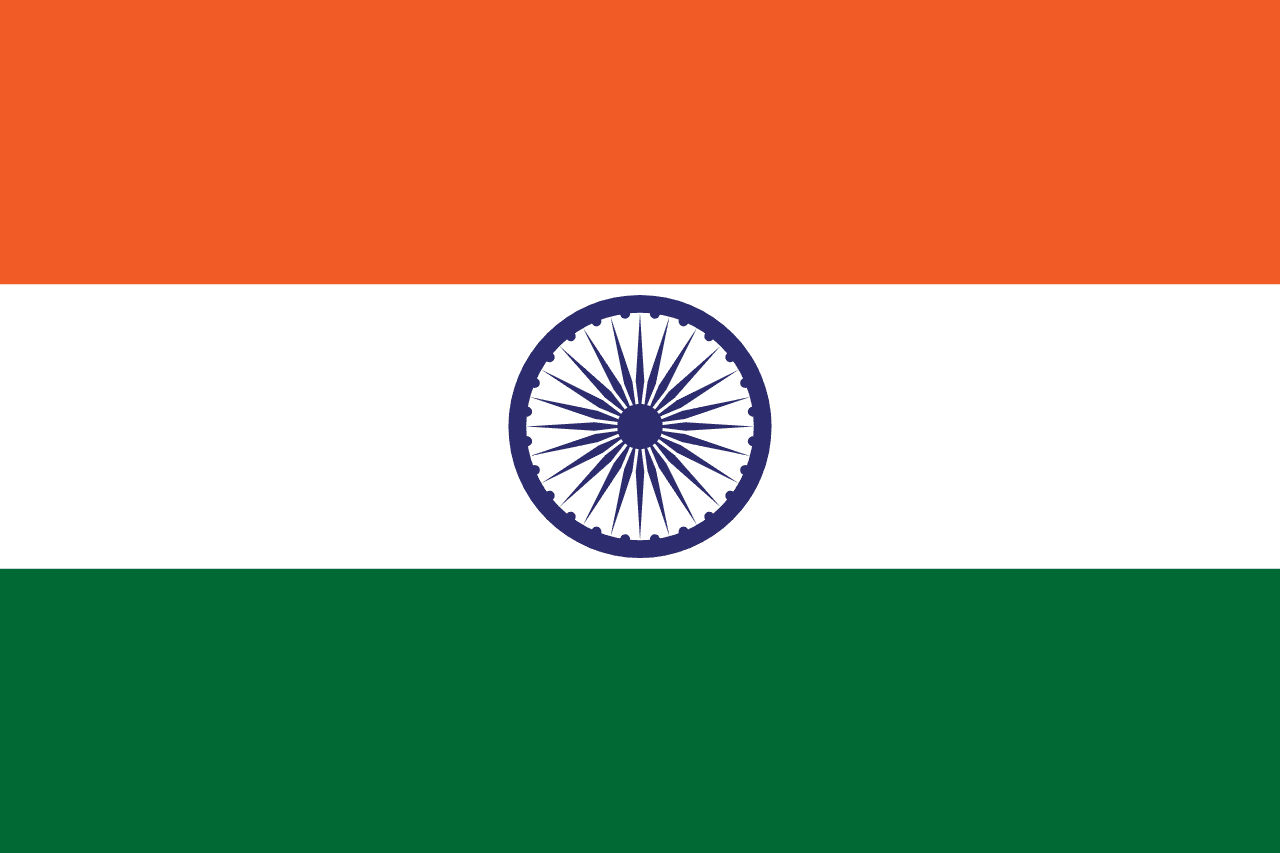
— INTROOn 7 September 2025 a sold-out hockey stadium in Rajgir, a small town in Bihar with no hockey tradition whatsoever, was boiling in the evening heat. India beat South Korea 4-1 in the final of the Asia Cup and in doing so claimed not only a fourth continental title, but also a direct ticket to the 2026 World Cup. The crowd, mostly women and children, braved the oppressive humidity and turned it into a spectacle. For a country where hockey was once the national pride, it felt like a homecoming.
This dossier follows the Indian men's team on its way to the World Cup in Amstelveen and Wavre. It sketches a country with the richest hockey past in the world, eight Olympic titles and the 1975 world title, that at the same time wrestles with the shadow of that past. Two Olympic bronze medals in a row prove that India is back among the world's best, but the country travels there as one of the outside title contenders, after an eighth place in an erratic Pro League that did feature promising closing wins over Germany and the Netherlands. India has been waiting for a World Cup medal since 1975, and for Olympic gold since 1980. The core leans on the twilight years of veterans like Manpreet Singh and Harmanpreet Singh alongside a rising generation, while the goalkeeping position remains unresolved after the retirement of PR Sreejesh. Seen that way, this is perhaps the last big chance for this crop, and the central question is: does the experience up front outweigh the doubts at the back, or can India under Craig Fulton finally complete the circle?
1. The position in 2026
— POS-01World ranking and qualification
India travels to the World Cup as the highest-ranked Asian team, but on the world ranking it still looks up at the backs of the European powerhouses. Above India stand countries like Belgium, England and the Netherlands, and the gap to that top is exactly what this tournament is about. Qualification was effortless: by winning the Asia Cup 2025 in Rajgir, India qualified directly, without the detour of a separate qualifying tournament.
| Country | Rank M | Points M |
|---|---|---|
| India | #8 | 3,072.69 |
| Pakistan | #12 | 2,561.59 |
| Malaysia | #15 | 2,346.77 |
| Japan | #17 | 2,300.5 |
| China | #20 | 2,131.52 |
That continental dominance is a constant in Indian hockey, but it says little about what happens at a World Cup. India has been in a class of its own in Asia for decades, with four titles at the Asian Games and a record five Asian Champions Trophy titles. The real yardstick lies elsewhere: against the European teams that dictate the high tempo and the physical duels of modern hockey. There, in Amstelveen, India must prove that its regional rule also holds up on the global stage.
2. Historical context
— HIST-02All of India's World Cup appearances
India is one of only four countries, alongside Germany, the Netherlands and Spain, to have taken part in every edition of the World Cup. The figures tell a story of an early flowering and a long interim period of mediocrity.
| Year | Host country | Placing | Result |
|---|---|---|---|
| 1971 | Spain | 3rd | Bronze, after beating Kenya in the third-place play-off |
| 1973 | Netherlands | 2nd | Silver, lost the final to the Netherlands after shoot-outs |
| 1975 | Malaysia | 1st | World champion, 2-1 against Pakistan |
| 1978 | Argentina | 6th | First time outside the medal places |
| 1982 | India | 5th | As host nation in Bombay |
| 1986 | England | 12th | Last place, worst World Cup ever |
| 1990 | Pakistan | 10th | |
| 1994 | Australia | 5th | Best result since 1982 |
| 1998 | Netherlands | 9th | |
| 2002 | Malaysia | 10th | |
| 2006 | Germany | 11th | Not a single pool win |
| 2010 | India | 8th | As host nation in New Delhi |
| 2014 | Netherlands | 9th | |
| 2018 | India | 6th | Quarter-final, lost to the Netherlands |
| 2023 | India | 9th | Shared, eliminated in the crossover by New Zealand |
The one world title
India won the World Cup exactly once, and that moment is etched into the collective memory. On 15 March 1975 in Kuala Lumpur, the team of captain Ajit Pal Singh and manager Balbir Singh Sr. beat arch-rival Pakistan 2-1 in the final. Ashok Kumar, a son of the legendary Dhyan Chand, scored the winning goal. It was the first time the World Cup was played on Asian soil, and India, after bronze in 1971 and silver in 1973, finally delivered on its promise.
That title came at the end of an era. At the Olympic Games, India had won gold six times in a row between 1928 and 1956, with an unbeaten run of thirty matches, and the team of Dhyan Chand was considered unbeatable. Eight Olympic titles in total, plus the Olympic gold of Moscow in 1980, make India to this day the most successful hockey nation in Olympic history. The introduction of artificial turf from 1976 onwards hit India hard: the stickwork and combinations that ruled on natural grass yielded less of an advantage on the faster artificial turf, and the decline set in.
Recent editions
The two most recent World Cups showed the ambivalence of modern India. In 2018, as host nation in Bhubaneswar, the team won its pool and reached the quarter-final, where the Netherlands proved too strong. In 2023, again as host nation, it went wrong: India, seeded sixth in the world, finished in a shared ninth place after a painful crossover defeat to New Zealand. The two causes the Indian press pointed to, a dismal penalty corner conversion rate and the absence of goals from open play, still echo in 2026.
3. The Fulton era
— COACH-03Philosophy and approach
When Hockey India appointed Craig Fulton in March 2023, the South African who helped Belgium win Olympic gold in Tokyo as an assistant, the country deliberately chose to break with the past. Under predecessor Graham Reid, India played an aggressive, attacking press that looked spectacular but left the team vulnerable in the closing stages of matches. Fulton reversed the priority. His motto became "defend to win": first get the defensive structure in order, only then take the offensive risk.
Fulton put it aptly himself after the Olympic quarter-final against Great Britain in Paris, when India were a man down: with a man fewer you cannot keep the ball for long, you drop deep and defend to win it back. The team learned to keep its patience, to keep the ball within the side and to wear the opponent down physically instead of rushing the attack. Not everyone was immediately convinced, but the results proved Fulton right: Olympic bronze in Paris, gold at the 2023 Asian Games, two Asian Champions Trophy titles and the 2025 Asia Cup. At home he was named coach of the year.
Former international V. Baskaran, captain of the 1980 Olympic gold, summed up the transformation: his defensive system is good, it almost looks like an attack. But Baskaran immediately put his finger on the sore spot that Fulton had not yet healed: the forward line must deliver more, because India cannot always lean on penalty corners.
Paris 2024: the road to bronze and the legacy
In Paris, India reached the semi-final, where Germany proved too strong, and then took bronze by beating Spain 2-1. Captain Harmanpreet Singh scored both goals and finished with ten goals as the tournament's top scorer. It was India's thirteenth Olympic hockey medal and the first time since Munich 1972 that the country stood on the podium at two Games in a row. The match was also the farewell of goalkeeper PR Sreejesh, who retired after sixteen years and left a gap in the defensive organisation that in 2026 has not yet been fully filled.
Asia Cup 2025 Rajgir
The last major tournament before the World Cup was the Asia Cup, and there India showed why it remains so dominant in Asia. The title in Rajgir, with the 4-1 win over South Korea, secured the World Cup ticket; forward Abhishek Nain was the top scorer there with six goals and Player of the Tournament. The title also gave Fulton a versatile, broadly deployable squad. He uses that depth deliberately, also because the World Cup and the 2026 Asian Games fall close together and he asks his players for an extremely heavy season.
FIH Pro League 2024-25 and 2025-26
The Pro League is a testing laboratory for Fulton, and the results were accordingly uneven. In 2024-25 India started strongly with five home wins, only to lose seven matches in a row in the European leg and finish eighth of nine. The 2025-26 season was erratic: a disastrous home leg in Rourkela, where the team lost four times amid criticism of selection and tactics, was later followed by an upturn in the European leg with wins over Olympic champions the Netherlands, world champions Germany and, in the first-ever Pro League meetings between the two, twice over Pakistan. In the end India finished eighth of the nine nations, with nineteen points from sixteen matches.
| Position | Team | Played | Points | Goal difference |
|---|---|---|---|---|
| 1 | Belgium (champions) | 16 | 39 | TBD |
| 2 | England | 16 | 35 | TBD |
| 3 | Australia | 16 | TBD | TBD |
| 4 | Netherlands | 16 | TBD | TBD |
| 5 | Argentina | 16 | TBD | TBD |
| 6 | Germany | 16 | TBD | TBD |
| 7 | Spain | 16 | TBD | TBD |
| 8 | India | 16 | 19 | TBD |
| 9 | Pakistan (relegated) | 16 | 0 | -57 |
Final standings FIH Pro League 2025-26 (men's), season concluded on 28 June 2026. Belgium became champions and qualified directly for the 2028 Games; Pakistan lost all sixteen of its matches and were relegated. India won four, drew five (with two shoot-out wins) and lost seven. The exact points and goal differences of the mid-table are listed as TBD. Source: FIH Pro League 2025-26.
4. The squad
— SQUAD-04The staff under Fulton
At the helm is chief coach Craig Fulton, supported by a staff of analysts and assistants from Hockey India. A notable name behind the scenes is former drag-flicker Jugraj Singh, who works as penalty corner coach on the technique of the shooters. Hockey India, the national federation, is one of the most influential bodies in world hockey, partly thanks to the long-standing support of the state of Odisha.
The probable World Cup core
The selection below is the 24-strong group that Hockey India named for the European leg of the Pro League on 27 May 2026, the most recent official squad and the probable World Cup core. The final eighteen-strong World Cup squad had not yet been officially announced at the time this dossier was compiled. The goalkeeping choice is notable: veteran Krishan Pathak was on the reserve list for this selection, while Suraj Karkera and the young Mohith Shashikumar travelled and shared the minutes in Europe. The remaining reserves were Araijeet Singh Hundal, Maninder Singh, Poovanna Chandura Boby and Vishnu Kant Singh.
| Surname | First name | Club | Position | Birth year | Caps |
|---|---|---|---|---|---|
| Singh | Harmanpreet (C) | Defender | 1996 | 258 | |
| Karkera | Suraj | Goalkeeper (GK) | |||
| Shashikumar | Mohith | Goalkeeper (GK) | |||
| Rohidas | Amit | Defender | 1993 | ||
| Singh | Jarmanpreet | Defender | 1996 | ||
| Singh | Jugraj | Defender | |||
| Lakra | Amandeep | Defender | |||
| Sumit | Defender | ||||
| Sanjay | Defender | ||||
| Siwach | Yashdeep | Defender | |||
| Singh | Manpreet | Midfielder | 1992 | 413 | |
| Singh | Hardik | Midfielder | 1998 | ||
| Prasad | Vivek Sagar | Midfielder | 2000 | ||
| Singh | Rajinder | Midfielder | |||
| Pal | Raj Kumar | Midfielder | |||
| Sharma | Nilakanta | Midfielder | |||
| Moirangthem | Rabichandra Singh | Midfielder | |||
| Singh | Mandeep | Forward | |||
| Singh | Sukhjeet | Forward | |||
| Abhishek | Forward | ||||
| Singh | Dilpreet | Forward | 2000 | ||
| Karthi | Selvam | Forward | |||
| Lakra | Shilanand | Forward | |||
| Lalage | Aditya Arjun | Forward |
Five key players
Harmanpreet Singh is the heart of the team. The captain and drag-flick specialist, born into a farming family near Amritsar, developed his strength, by his own account, in the fields and behind the wheel of the tractor. He is regarded as one of the best drag-flickers in the world, was twice FIH player of the year and, after Paris, received the Major Dhyan Chand Khel Ratna, India's highest sporting honour. Tellingly, he names the team's biggest weakness himself: if we start well but finish poorly, strong teams punish us, that was the big lesson.
Manpreet Singh made history in June 2026 by becoming the most-capped Indian player ever, passing 413 internationals, ahead of Dilip Tirkey. The former captain, who led India to Olympic bronze in 2021, plays as the last man under Fulton and starts the build-up from the back. His hunger is undiminished: the dream of a World Cup and Olympic title inspires me every day.
Hardik Singh is the engine in midfield and the vice-captain. He comes from a fifth-generation hockey family: his uncle Gurmail Singh won Olympic gold in 1980. When he played his 150th international in June 2025, against the Netherlands in Amsterdam, he called it surreal. Hardik handles the transition from defence to attack and is the one who gets the Indian counter going.
Krishan Pathak inherited the gloves from the retired Sreejesh. The goalkeeper of Nepalese descent, who lost his mother at the age of twelve and later his father, carries the responsibility heavily but consciously: Sree bhai reminded me that we hadn't won a World Cup in a long time, so I want to win it for him. Yet his place is not secure: at the last selection he was on the reserve list, while Suraj Karkera and the rising Mohith Shashikumar shared the minutes, which keeps the goalkeeping choice an open question until the World Cup.
Amit Rohidas is the physical defender and the unique weapon on defensive penalty corners. As first rusher he throws himself at top speed in front of the incoming drag flick, protected by mask and gloves, and neutralises the shooting line with his choice of angle. He comes from Sundergarh in Odisha, the tribal hockey heartland that earlier produced Dilip Tirkey.
Competition analysis by line
| Line | Certain | Contenders | Reserve / youth |
|---|---|---|---|
| Goal | TBD | Krishan Pathak, Suraj Karkera, Mohith Shashikumar | Pawan |
| Defence | Harmanpreet Singh, Amit Rohidas, Jarmanpreet Singh | Jugraj Singh, Sumit, Sanjay | Amandeep Lakra, Yashdeep Siwach, Nilam Sanjeep Xess |
| Midfield | Manpreet Singh, Hardik Singh, Vivek Sagar Prasad | Nilakanta Sharma, Rajinder Singh, Raj Kumar Pal | Rosan Kujur, Manmeet Singh, Rabichandra Moirangthem |
| Attack | Mandeep Singh, Sukhjeet Singh, Abhishek, Dilpreet Singh | Selvam Karthi, Shilanand Lakra | Araijeet Singh Hundal, Maninder Singh, Aditya Arjun Lalage |
5. Tactical profile
— TACT-05The Fulton system
At the heart of Fulton's approach is the half-court zonal press: India does not immediately chase down the building opponent, but drops back in a controlled way to around the halfway line and forms a compact block there. By shrinking the spaces between the lines, the centre becomes almost unplayable and the opponent is forced out to the flanks. As soon as the ball is won, there is space behind the opposing defence that India's fast forwards can exploit. A strict balance rule comes with that: if five players go forward, then five stay back, and as soon as a defender pushes up, a midfielder slides in to close the gap.
That system leans on a physical condition that ranks among the world's best; analysts describe the intensity with which the team can keep sprinting and pressing for an entire match as having a side full of engines. A fine example of the layered build-up that Fulton aims for was a goal by Shilanand Lakra against Australia in Hobart: an attack that began deep in their own half with Hardik Singh and was built up patiently through several stations, brick by brick, instead of with reckless improvisation.
Here lies the honest vulnerability too. Under Fulton, India has become solid but predictable. Top nations have seen through the pattern: during the European leg of the 2024-25 Pro League, the Indian press itself wrote that opponents currently have the measure of India. Against a well-organised high press, the build-up stalls and penetrating the circle from open play becomes a problem. On top of that comes the recurring mental vulnerability: India has historically struggled with sudden-death scenarios and strikingly often concedes another goal late in the match, even after taking the lead. It is exactly the kind of detail that can prove fatal in a knockout phase.
The goalkeeping battle
Sreejesh's retirement left not only a sporting gap, but also a leadership vacuum in the organisation at the back. Krishan Pathak is the most experienced candidate, but his place is not secure: at the last selection he was on the reserve list, while Suraj Karkera and the rising Mohith Shashikumar shared the minutes. Who stands between the posts in Amstelveen is one of the open decisions Fulton has to make just before the tournament.
The penalty corner as a weapon
The penalty corner is at once India's biggest weapon and biggest worry. Almost everything revolves around Harmanpreet, and it is precisely that dependence that is the problem: in the Hobart leg, when he was absent, India found no equivalent alternative. To break the predictability, the team increasingly deploys a double battery, with two drag flickers at once at the top of the circle, so that the defending rushers have to choose. India also leans on deflections, subtle touches just in front of the keeper that make a hard pass unstoppable. The figures, however, remain worrying: the penalty corner conversion is chronically low, something that teams who time their rush well, such as Japan, punish time and again. Whether India solves that at the World Cup will largely determine how far it goes.
6. The rivals
— RIVAL-06Pakistan: the oldest rivalry
No fixture in world hockey carries as much weight as India against Pakistan. The two countries have played each other more than 180 times, and although Pakistan leads historically, India has been dominant for years: over the last ten years India remained unbeaten across seventeen meetings. In June 2026 India won in London 4-3, though Pakistan came nervously close in the closing seconds. Telling for the sport: where the cricket teams refused to shake hands, the hockey players did shake hands.
England: the physical pool clash
England is the top seed in Pool D and the toughest pool opponent. Fulton characterises the side as physically strong and extremely organised; against them India's positional calm and the avoidance of needless turnovers will be crucial in order not to be overrun.
Australia and the European top
Outside the pool wait the real yardsticks. Australia, which in Paris 2024 beat India at the Games for the first time in 52 years, remains a benchmark, as do reigning Olympic champion Belgium, world champion Germany and the Netherlands. They are the teams that, with high tempo and a suffocating press, can disrupt India's build-up, and that keep stopping India time and again at the highest level.
Key players per rival
- Pakistan: captain Ammad Shakeel Butt, and in attack names such as Sufyan Khan and Moin Shakeel, who scored in the closing seconds in London.
- England: captain and midfielder Zach Wallace, and forwards Nick Bandurak and Liam Ansell.
- Australia: record international Eddie Ockenden, drag flicker Jeremy Hayward and top scorer Blake Govers.
- Netherlands: captain Thierry Brinkman and penalty corner specialist Jip Janssen.
7. The mentality of Indian men's hockey
— MIND-07Indian hockey carries a burden no other hockey nation knows: the weight of a golden past. The generations of Dhyan Chand turned hockey into a national symbol, and every team since plays in the shadow of that invincibility. When India took bronze in Tokyo after a comeback from 1-3 to 5-4 against Germany, it ended a drought of forty-one years, and it felt like the start of a new era.
That resilience is the positive side of the Indian mentality. The flip side is the pressure. A country where millions are watching and where hockey fights cricket for the national soul places on every player an expectation that weighs heavily in the decisive moments. Fulton has taught the team to no longer panic when trailing but to hold its structure, and players like Hardik Singh now dare to dream out loud of a world title. At the same time, the Indian press soberly points out that the team has historically fallen short in sudden-death scenarios, and that specialised mental coaching would be no needless luxury. The tension between resilience and expectation is, more than any tactical detail, what will colour India's World Cup campaign.
8. How men's field hockey lives in India
— CULT-08Hockey does not live everywhere in India, but where it lives, it lives deep. The cradle lies in two regions. In Punjab, around Jalandhar, lies the village of Sansarpur, which on its own produced fourteen Olympians, almost all from one and the same street. Many of the current key players, Harmanpreet, Hardik, Sukhjeet, come from this area. The second hotbed is Odisha, and specifically the district of Sundergarh, where hockey is a tribal folk sport. Former Olympian Lazarus Barla aptly summed up the contrast with the rest of the country: where urban children get plastic cricket bats, parents in Sundargarh give their children hockey sticks of local wood.
That grassroots culture stands in direct competition with cricket, which is supreme in funding and media attention. In hockey villages that ratio is the other way around: in a report from Odisha a coach recounts that children there learn to hold a hockey stick before they learn to eat, and that almost every house is home to a player and a fan. The infrastructure that catches this talent is largely funded by the state of Odisha, which has sponsored the national teams since 2018 and extended the contract to 2033. The showpiece of this is the Kalinga Stadium in Bhubaneswar, which also hosts the relaunched Hockey India League, the competition that returned after a seven-year break and gives young talent a stage. And that hockey can also catch fire outside the traditional heartlands was proven by the Asia Cup of 2025 in Bihar, where a state with no hockey history delivered sold-out, wildly enthusiastic stands.
9. World Cup 2026 in Amstelveen and Wavre
— WK26-09The Wagener Stadion and the route via Wavre
India plays all its pool matches at the Wagener Stadion in Amstelveen, which is temporarily expanded to over ten thousand seats for the tournament. It is no home ground, but for the large Indian diaspora in the Netherlands it can come to feel rather like one, certainly during the match against Pakistan. The men's final is played on Sunday 30 August at the Belfius Hockey Arena in Wavre; if India wants to be there, a long road through the tournament awaits.
Pool D and the tournament format
India has been drawn into Pool D, together with England, Pakistan and Wales. The tournament features sixteen nations; the best two per pool advance to a second group stage, in which the points carried over and two extra matches decide who qualifies for the semi-finals. Fulton called the draw a strong pool, exactly what you want at a World Cup, and kept his message simple: respect for every opponent, but confidence in their own strength. India opens on 15 August against Wales, on India's Independence Day, plays England on 17 August and closes the pool against Pakistan on 19 August. At the presentation of the World Cup team profile, Fulton pointed to the extra motivation of this anniversary year, half a century after the 1975 world title, and captain Harmanpreet Singh left no doubt that India does not merely want to take part, but wants to bring the trophy home.
Amstelveen, Nederland
Standings
| # | Team | P | W | D | L | GF | GA | GD | Pts |
|---|---|---|---|---|---|---|---|---|---|
| 1 | ENG | 3 | 3 | 0 | 0 | 16 | 5 | +11 | 9 |
| 2 | IND | 3 | 2 | 0 | 1 | 10 | 8 | +2 | 6 |
| 3 | PAK | 3 | 0 | 1 | 2 | 7 | 12 | -5 | 1 |
| 4 | WAL | 3 | 0 | 1 | 2 | 6 | 14 | -8 | 1 |
India finished 2nd in Pool D and play in Pool E in phase 2. Their new opponents come from Pool A: Netherlands (1st) and Argentina (2nd). Pool rival England (1st in Pool D) is also in Pool E; that match was already played in phase 1. Pool E competes for places 1 to 8, with the top two reaching the semifinals.
Standings
| # | Team | P | W | D | L | GF | GA | GD | Pts |
|---|---|---|---|---|---|---|---|---|---|
| 1 | NED | 3 | 2 | 1 | 0 | 8 | 4 | +4 | 7 |
| 2 | ARG | 3 | 2 | 0 | 1 | 9 | 7 | +2 | 6 |
| 3 | ENG | 3 | 1 | 1 | 1 | 7 | 7 | 0 | 4 |
| 4 | IND | 3 | 0 | 0 | 3 | 6 | 12 | -6 | 0 |
Knockout phase
Scenario analysis: the road to the final
The most likely scenario is a duel with England for first place in the pool, with Pakistan as a dangerous outsider. If India wins the pool or finishes second, the second group stage follows, in which it has to manage to qualify for the semi-finals against a strong European side. There lies the pivotal question: can India keep its defensive structure and penalty corner conversion at the required level against a team with a smothering press? If it can, a first World Cup medal since 1975 comes into view. If India stumbles over its familiar weaknesses, missed corners and soft goals conceded, an early exit looms, as at the home World Cup of 2023.
10. Viewing tips for the 2026 World Cup
— WATCH-101. The drag flick of Harmanpreet Singh. On every penalty corner the Indian attack revolves around the captain. Watch the power and the low trajectory of his drag flick; he was the top scorer with it at Paris 2024. Sometimes he deliberately acts as a decoy so that a teammate scores, as against Pakistan in 2026.
2. The double battery at the edge of the circle. If two drag flickers stand ready at the same time during an attacking penalty corner, India sows doubt among the rushers. Watch whether the injection is clean and the stopper settles the ball; a slow stop often immediately explains why the corner fails.
3. The sprint of first rusher Amit Rohidas. On a defensive penalty corner, Rohidas is the one who breaks first out of the corner to block the flick. Watch his choice of angle and how he uses stick and body as a shield; he is regarded as one of the best first rushers in the world.
4. The transition axis through Hardik Singh. As soon as India wins the ball, watch how quickly it reaches Hardik. If he accelerates immediately and pushes the ball forward through quick passing, you see the hinge between Fulton's defensive structure and the traditional Indian counter.
5. The long balls of Manpreet Singh. As the last man, the record international starts the build-up with deep, crisp passes from the back. It is the way India tries to get out from under a high press.
6. Recognising the half-court press. If the Indian forwards don't press on after losing the ball but drop back to the halfway line, India is running its zone press: a compact block that squeezes the centre shut and forces the opponent towards the flanks.
7. The moment right after an Indian goal. It is precisely after scoring that India has proved vulnerable to a quick goal against. Watch whether the team holds its structure or slackens for a moment; it is a recurring pattern from the Pro League.
8. India versus Pakistan on 19 August. The closing pool match is the emotional highlight of the group stage. Harmanpreet plays it down as "just a match", but admits there is a different energy in the air. For the neutral viewer this is the match not to miss.
Historical highlights
— HIST1928
Amsterdam: first Olympic gold
First Olympic gold, the start of six gold medals at consecutive Games.
1936
Berlin: gold under Dhyan Chand
Olympic gold under captain Dhyan Chand, an 8-1 final against Germany.
1948
London: first title as an independent nation
First Olympic title as an independent nation, 4-0 in the final.
1964
Tokyo: Olympic gold
Olympic gold after the lost final of 1960.
1975
Kuala Lumpur: world champions
World champions, 2-1 against Pakistan, the only World Cup title.
1980
Moscow: last Olympic title
Last Olympic title to date.
2021
Tokyo: Olympic bronze
Olympic bronze, 5-4 against Germany, ending a 41-year drought.
2022
Hangzhou: gold at the Asian Games
Gold at the Asian Games and direct qualification for Paris.
2024
Paris: Olympic bronze
Olympic bronze, 2-1 against Spain, first back-to-back medals since 1972.
2025
Rajgir: Asia Cup title
Asia Cup title, 4-1 against South Korea, a direct World Cup ticket.
Conclusion
— CLOSEIndia's World Cup campaign has roughly three possible outcomes. In the best case the defensive structure holds, the penalty corner delivers on its promise, and India reaches its first World Cup medal since 1975, a breakthrough that finally translates the bronze of Tokyo and Paris into the tournament that has eluded the country most. In the expected scenario India reaches the second group stage or the quarter-final zone, only to fall just short there against a European top side. In the worst case the old demons return, missed corners and soft goals against, and the World Cup ends early, as it did on home soil in 2023.
Whatever the outcome, on Sunday 30 August in Wavre India will probably not be in the final, and that is exactly the measure of the challenge. This is a team that wins everything in Asia and reaches the podium at the Games, but that at a World Cup has spent half a century searching for the last piece of the puzzle. Fulton has laid the foundation; the question is whether this generation, with Harmanpreet and Manpreet in their twilight years, can couple the structure to the sharpness that makes the difference at the very highest level. If they manage it in Amstelveen, then the circle that began in 1975 in Kuala Lumpur is finally complete.
Sources
— SRCOfficial sources
- FIH, Fédération Internationale de Hockey, with the world ranking and the FIH Pro League.
- Hockey India, the national federation.
- Asian Hockey Federation, the continental federation.
- Olympics.com, for the Olympic and World Cup history.
- FIH team profile India (2026 World Cup), for the selection context and tournament objective.
Indian media
- The Bridge, for tactical analyses and player profiles.
- ESPN India, for critical tournament analyses.
- The Indian Express and The Hindu / Sportstar.
- ThePrint and Down To Earth, for culture and background pieces.