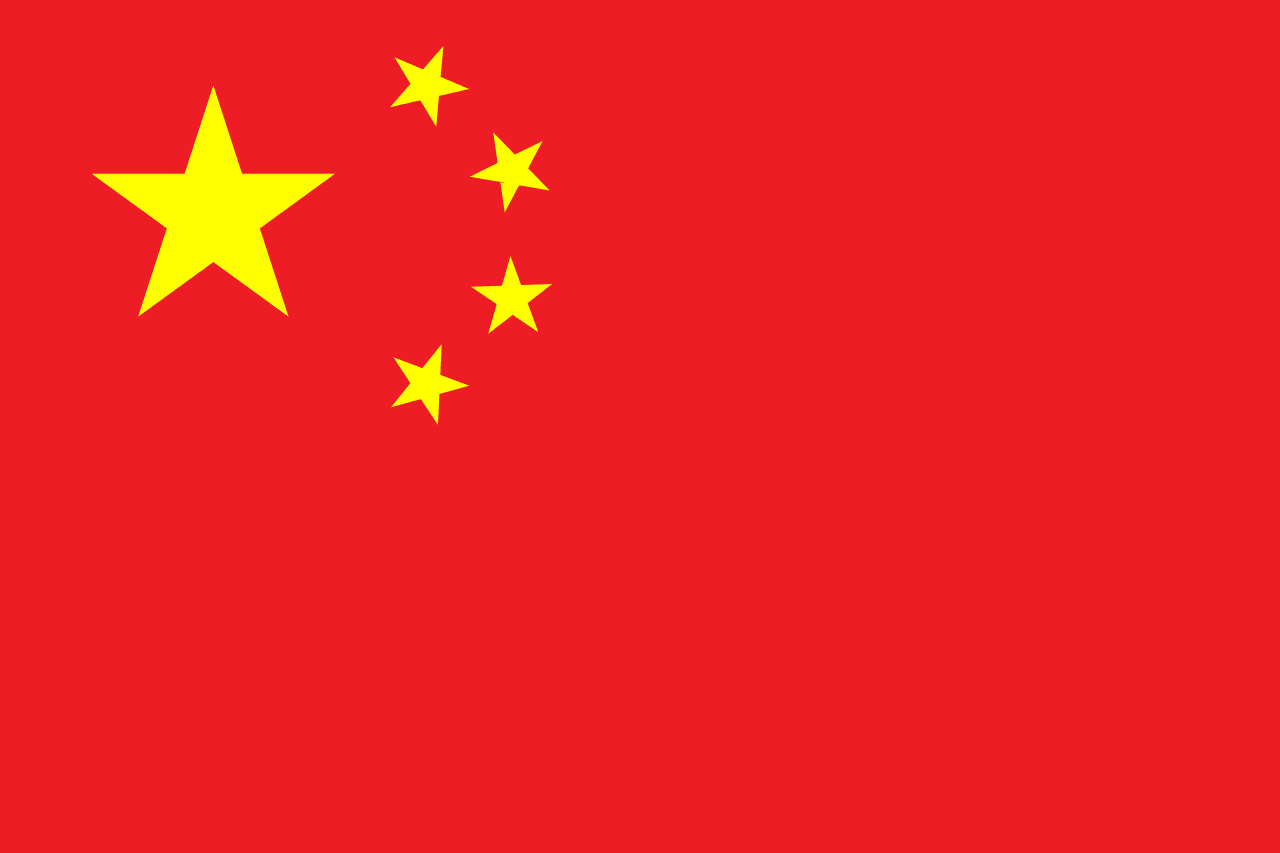
Introduction
— INTROOn 7 August 2024, goalkeeper Ye Jiao stood in the Olympic semi-final penalty shoot-out against Belgium and saved three of them. China, a team bookmakers had listed with the sixth-lowest odds on gold, had reached the Paris final. The day before, they had knocked out Australia's Hockeyroos, a team that had spent years hungering for its own semi-final berth. Standing on the Chinese bench was an Australian: Alyson Annan, the coach the KNHB had released three years earlier, who had now awakened a sleeping giant.
This dossier traces that revival. It shows how a game played in a remote corner of Inner Mongolia for more than a thousand years grew, via a state machine and an Australian mind, into Olympic silver, and how close China really is to a first world title, on the Amstelveen grass where Annan once won everything for the Netherlands.
1. Position in 2026
— POS-01World ranking and qualification
China enters the World Cup year as the fourth-ranked team in the world, behind the Netherlands, Argentina and Belgium. That is a startling position for a team that finished last of sixteen at the 2018 World Cup in London. Qualification for 2026 came via the shortest possible route: by winning the Women's Asia Cup in Hangzhou in September 2025, beating arch-rival India 4-1 in the final, China secured the automatic Asian ticket. "Qualifying directly through the Asia Cup was important for us," Annan said, with an eye on a crowded calendar of Pro League, Asian Games and World Cup.
| Country | Rank W | Points W |
|---|---|---|
| China | #4 | 3,182.77 |
| India | #8 | 2,938.36 |
| Japan | #11 | 2,476.52 |
| South Korea | #17 | 2,066.22 |
| Malaysia | #21 | 1,912.09 |
Within Asia, China is now the uncontested leader. It defeated India in the Asia Cup final, Korea in the Asian Games final in Hangzhou (played in 2023), and Japan 5-0 in the Paris group stage. Because it dominates its region without the energy cost of a tough qualifier, China can point its entire international calendar at the European and Argentine top, the only teams that still rank above it.
2. Historical context
— HIST-02All World Cup appearances
China is competing at its tenth World Cup. The record contains no title and no final, but one medal and several strong finishes alongside some deep valleys.
| Year | Host country | Finish | Result |
|---|---|---|---|
| 1990 | Australia (Sydney) | 6th | Debut |
| 1994 | Ireland (Dublin) | 7th | |
| 1998 | Netherlands (Utrecht) | 11th | |
| 2002 | Australia (Perth) | 3rd | Bronze, first World Cup medal |
| 2006 | Spain (Madrid) | 10th | |
| 2010 | Argentina (Rosario) | 8th | |
| 2014 | Netherlands (The Hague) | 6th | |
| 2018 | England (London) | 16th | Lowest finish ever |
| 2022 | Netherlands (Amstelveen) and Spain (Terrassa) | 9th | |
| 2026 | Belgium (Wavre) and Netherlands (Amstelveen) | qualified |
The major tournaments
The greatest day in Chinese World Cup history came at Perth in 2002: in the bronze-medal match, defending champions Australia were beaten 2-0, giving China its first ever World Cup medal under South Korean head coach Kim Chang-back. That same year China won the Champions Trophy in Macau and the first of four Asian Games gold medals (2002, 2006, 2010 and 2022). Runner-up finishes in the Champions Trophy followed in 2004 and 2006.
The peak came at the Beijing 2008 Olympics: China reached the final on home soil and won silver, again under Kim Chang-back. It would take sixteen years to equal that achievement.
Recent editions
After 2008, China gradually faded. The 2018 World Cup in London ended in last place. The 2022 edition in Amstelveen and Terrassa brought a ninth-place recovery. The real turning point was not a World Cup but the Paris 2024 Olympics, where Olympic silver confirmed China's return to the very top. For a team that had finished bottom six years earlier, that is a remarkable revival in a single Olympic cycle.
3. The Annan era
— COACH-03Philosophy and approach
When Alyson Annan was unveiled as China's head coach in May 2022, it was barely four months after her separation from the KNHB. That departure in January 2022 followed an independent inquiry into the culture inside the Dutch squad, despite Olympic gold in Tokyo, two World Cup titles and three European Championship titles in six years. Annan consistently declines to revisit it. Within a day of leaving, the Chinese federation called. At the end of 2025 she was named FIH Women's Coach of the Year for a record sixth time.
What she brought to China was less a tactical system than a culture shift. She moved the team from top-down command to player empowerment, placing responsibility back with the players on the pitch. "I put a lot of responsibility back with the team," she told Xinhua. Players learn to read situations and act on principles rather than running prescribed patterns. Underpinning that is a rigorous data foundation: Annan found that Chinese players were covering around 5,500 metres per match against the Dutch benchmark of around 7,500, and redesigned training to close that gap through intensity rather than volume. Her mantras in Mandarin, "Baifenbai chuanqiu" (100% pass) and "Kanqiu, chuanqiu" (see the ball, pass the ball), are not slogans but the architecture of a possession-based style where the ball does the work.
She also learns Chinese ("if you are the coach of a country you need to speak the language of that country," she said in Hangzhou), and she demands toughness: in a memorable Xinhua headline, she told her players they must stop being too nice and stop being afraid of pressure. Defeat is treated as material: after a loss to Germany she once said that a loss is "only a scoreboard thing" and that she is not training scoreboard journalists.
Asia Cup 2025 and the Asian Games: continental dominance
The continental titles frame the growth story. At the Hangzhou Asian Games (played in 2023), China won the final 2-0 against Korea and secured the Paris 2024 ticket. Two years later, at the 2025 Asia Cup on home soil in Hangzhou, China won all seven of its matches and scored 42 goals. India led inside the first minute of the final, but Ou Zixia equalised from a penalty corner, Li Hong put China ahead after the break, and Zou Meirong and Zhong Jiaqi settled it within three minutes for a 4-1 win. Zou Meirong finished as the tournament's top scorer with eleven goals and 17-year-old Luo Yaxi was named Best Young Player. It was China's third Asia Cup title, the first since 2009, and came with direct World Cup qualification.
FIH Pro League 2024-25 and 2025-26
The Pro League is the hardest benchmark because China faces the European elite. The growth is measurable: fifth in 2023-24, a fourth-place finish in 2024-25 with wins over Argentina, Belgium and Germany, and another fourth place in the completed 2025-26 season. Back-to-back fourth places are China's best-ever Pro League result.
| Position | Team | Played | Points | Goal diff |
|---|---|---|---|---|
| 1 | Netherlands | 16 | 42 | +47 |
| 2 | Argentina | 16 | 34 | +16 |
| 3 | Belgium | 16 | 32 | +19 |
| 4 | China | 16 | 28 | +6 |
| 5 | Australia | 16 | 20 | -11 |
The table also tells the honest story: the gap to the very top remains real. In 2025-26 the Netherlands were again untouchable champions, taking direct Olympic qualification for Los Angeles 2028, while China lost its final match 5-1 to Germany, who scored all their goals in the last quarter. En route to August, China plays roughly fifty internationals per year, mostly in Europe, the "题海战术" ocean-of-tasks approach with which Annan tempers her team against the world's best.
4. The squad
— SQUAD-04Annan's staff
Annan leads an internationally mixed staff. Wikipedia lists assistants Adrian Lock (England), Katie Allen (Australia) and Chinese coaches Liu Pan and Huang Yongsheng. The most striking name from the Paris cycle was Ric Charlesworth, the Australian legend who coached Annan to two Olympic gold medals as a player and who in Paris deliberately sat high in the stand for a different perspective. The man who built Australia's dominance was now helping their biggest Asian rival.
Training group (Paris 2024 squad)
The FIH only releases the definitive 18-player World Cup squad on match day. The table below therefore shows the most recent fully documented large selection, that of the Paris 2024 Olympics; caps and goals are as registered at the time of those Games, and the Club column shows the provincial team. The core has shifted since: Li Hong has taken over the captaincy, veteran Peng Yang (206 caps) returned to the Pro League squad, and from the 2025 Asia Cup group goalkeeper Liu Ping and the then 17-year-old Luo Yaxi broke through.
| Last name | First name | Club | Position | Born | Caps |
|---|---|---|---|---|---|
| Ye | Jiao | Sichuan | GK | 1994 | 108 |
| Gu | Bingfeng | Liaoning | Defence | 1994 | 174 |
| Yang | Liu | Sichuan | Defence | 1998 | 52 |
| Zhang | Ying | Jiangsu | Midfield | 1998 | 72 |
| Chen | Yi | Sichuan | Forward | 1997 | 62 |
| Ma | Ning | Jilin | Midfield | 2000 | 73 |
| Li | Hong | Tianjin | Midfield | 1999 | 136 |
| Ou | Zixia (C) | Sichuan | Defence | 1995 | 167 |
| Dan | Wen | Sichuan | Midfield | 1999 | 96 |
| Zou | Meirong | Sichuan | Midfield | 2000 | 51 |
| He | Jiangxin | Sichuan | Midfield | 1997 | 102 |
| Fan | Yunxia | Jiangsu | Midfield | 2002 | 24 |
| Chen | Yang | Liaoning | Midfield | 1997 | 116 |
| Xu | Wenyu | Sichuan | Midfield | 1995 | 107 |
| Zhong | Jiaqi | Guangdong | Forward | 1999 | 119 |
| Tan | Jinzhuang | Sichuan | Defence | 2003 | 25 |
| Yu | Anhui | Forward | 2001 | 24 |
Five key players
Li Hong is the new captain and the creative engine. The 27-year-old midfielder, with 182 caps, took the armband from Ou Zixia and was nominated for 2025 FIH Player of the Year. Since September 2025 she has played her club hockey at Amsterdam, the club where Annan herself once coached. She scored the go-ahead goal in the Asia Cup final, and frames the mindset calmly: the Olympic silver is in the past, and what drives the team now is the hunger for more.
Zou Meirong, a post-2000 forward, was the top scorer at the 2025 Asia Cup with eleven goals and had earlier scored in the Olympic semi-final against Belgium. Her confidence is typical of this team: according to her, being the underdog is an advantage because China now believes it is better than the outside world thinks.
Gu Bingfeng is the defensive cornerstone and the penalty-corner weapon. With 174 caps and 107 goals, the defender from Liaoning is the squad's all-time top scorer, an extraordinary figure for someone who starts from the back; her drag flick produced a Pro League hat-trick, among others. One caveat: she was absent from the 2025 Asia Cup squad, so her World Cup role is still to be confirmed.
Luo Yaxi (born 2008) is the face of China's deep talent pool. The teenager was named Best Young Player at the 2025 Asia Cup and embodies the 70-plus names Annan has kept on her list since the National Games.
Ou Zixia, born in Qianwei, Sichuan, is the veteran: nearly 200 caps, three Olympics and former captain. At the Paris closing ceremony she was chosen alongside weightlifter Li Fabin as China's flag-bearer. Even with the armband now passed to Li Hong, she organises the play from the back.
Competition analysis by line
| Line | Certain | Contenders | Reserve / youth |
|---|---|---|---|
| Goal | Liu Ping, Ye Jiao | Wu Surong | youth keepers from national camps |
| Defence | Gu Bingfeng, Ou Zixia, Peng Yang | Yang Liu, Tan Jinzhuang | provincial academy talent |
| Midfield | Li Hong (C), Dan Wen, Zhang Ying, Chen Yang | Ma Ning, He Jiangxin, Xu Wenyu | broad National Games pool |
| Forward | Zhong Jiaqi, Zou Meirong, Chen Yi | Luo Yaxi, Yu Anhui | the 70+ scouted talents |
5. Tactical profile
— TACT-05The Annan system
China wants to be fast. After winning the ball, the team looks for depth almost immediately, pressing high to force errors and accelerating the switch from defence to attack. Equally, when ahead, China can drop into a compact, deep block, precisely the template it used in Paris to survive Belgium and then to hold the Netherlands at bay for sixty minutes in the final. Annan's explicit plan for the Paris final was straightforward: score early, then defend.
A revealing scientific window on China's game comes from a peer-reviewed performance analysis of the national team at the Tokyo Olympics and the Chinese National Games. It identified a distinctive circle-entry signature the researchers called "Handball Style", short, fast combinations around the circle, often via the central corridor and the right flank, resembling a handball team probing for a gap. Significantly, China executed this pattern far more frequently and effectively in domestic competition than at international level, where it produced fewer circle entries and fewer shots against stronger defences. Stronger teams, the study found, score primarily through volume: more circle entries, more shots. Exactly that speed-and-volume problem is what Annan's method addresses.
Goalkeeping battle
In goal there is now a genuine contest. Ye Jiao was the hero of the Olympic campaign with her shoot-out saves against Belgium, but during the 2025 Asia Cup title run it was Liu Ping between the posts, and she was shortlisted for FIH Best Goalkeeper at the end of 2025. Whoever ends up as number one, the message holds: a 0-0 after sixty minutes is rarely a disaster for China, because the shoot-out record is outstanding.
The penalty corner as a weapon
The penalty corner is the primary scoring mechanism. Gu Bingfeng's drag flick is the lead option, with Ou Zixia and Yang Liu as alternative executors, while Zou Meirong specialises in converting rebounds. Here lies the honest caveat. In February 2026 China lost both Pro League matches against the Netherlands (0-3 and 1-6), and the structural gap at the very top remains real. China survived the semi-final against Belgium in a shoot-out rather than through open-play dominance. The team relies heavily on a small group of penalty-corner specialists and on Ye Jiao: neutralise them and China's scoring sources against a top defence thin quickly. That is the precise scenario in which China could still stumble at the World Cup.
6. The rivals
— RIVAL-06Netherlands: the benchmark and the trauma
The Netherlands is everything China wants to become and the team that keeps stopping it. Oranje beat China in the Olympic finals of both 2008 and 2024, the latter only after a shoot-out. For Annan, it is the team where she won everything as coach; for China, it is simultaneously a mirror and a nemesis. A meeting in the Amstelveen World Cup would be the ultimate examination.
England: the pool decider
England shares Pool D with China and is known for physical strength and tactical discipline. The 18 August encounter is likely to decide the pool leadership and the route through the second phase.
India: the Asian arch-rival
The 2025 Asia Cup final was the latest chapter in a rivalry defined by Indian flair against Chinese discipline. India lost 1-4 and will be hungry for revenge in the opening Pool D match on 16 August.
Argentina: the likely crossing
Las Leonas are ranked second in the world and China's most probable heavyweight opponent in the second group phase, since Pool D crosses with Pool B, where Argentina plays.
Australia: the emotional footnote
In the Paris quarter-final, China beat the Hockeyroos 3-2, then coached by Annan's former gold-medal teammate Katrina Powell, a result Annan called "bittersweet". That chapter is now closed: Powell left in September 2025 and Rhett Halkett now coaches an Australia that has slipped to eighth, playing in Pool A, far from China's path.
Key players per rival
- Netherlands: Yibbi Jansen (penalty corner, Pro League top scorer), Pien Sanders, Frédérique Matla.
- England: Tess Howard, Lily Owsley.
- India: Salima Tete (captain), Navneet Kaur.
- Argentina: María José Granatto, Agustina Gorzelany (penalty corner), Cristina Cosentino.
- Australia: Grace Stewart (captain), Kaitlin Nobbs.
7. The mentality of Chinese women's hockey
— MIND-07The team's mental signature is resilience under pressure, built on a concrete sequence of moments. A decade ago, China lost heavily and regularly to the world's best; now it wins or draws. That awareness feeds a collective self-belief most visible in Paris, where the team eliminated two higher-ranked sides back to back as the underdog. "This is a do-or-die situation," Annan said after the Australia quarter-final, "and the girls did it." Then-captain Ou Zixia spoke of enormous reward when China reached the semi-finals.
That calm does not emerge from nowhere. Ye Jiao attributed her shoot-out saves to relentless repetition in training, not to chance. And Ou Zixia framed Annan's core lesson this way: a contest on the pitch is a snapshot with no thinking time, and what makes you act correctly in that instant is enough prior matches in your legs. It is the psychological shift Annan layered on top of Kim Chang-back's foundation: where the Korean's era centred on discipline and physical hardness, the current team has learned to embrace pressure rather than buckle under it.
8. How women's field hockey lives in China
— CULT-08To understand where the Snow Lotuses come from, you need to visit an unlikely place: Molidawa, the only Daur Autonomous Banner of China, on the banks of the Nen River in Inner Mongolia. The Daur people, reputed descendants of Khitan nobility, have played a game called "beikuo tarkebei" for more than a thousand years, two teams hitting a ball through a goal with a stick carved from bent oak root, in wooden, hair-filled or even flaming versions for night play. Closely related to the Tang-dynasty "bùdǎqiú", it survived only among the Daur, and in 2006 it was listed on China's national register of intangible cultural heritage.
When the state decided in the 1970s to fill a gap in its Olympic hockey programme, this folk game was the obvious foundation. Pioneer figure Hasen, China's first female hockey coach and first female international referee, helped establish the first team in Molidawa. By 1989, the banner earned the title "hometown of hockey", and with barely 320,000 inhabitants it produced so many internationals that the phrase "one banner, half the national team" took hold, at the Beijing 2008 Games, seven of the eighteen men's players came from Molidawa.
The modern women's squad shows how widely that seed has spread. The Paris 2024 roster drew no longer mainly from Inner Mongolia but from Sichuan, Liaoning, Jiangsu, Guangdong, Jilin and Tianjin, a national network of provincial sports schools funnelling talent from primary school upward. Players are state professionals on a salary with medal bonuses; the National Games, held every four years, serve as the internal championship and talent market, where Annan coded more than 70 candidates into her laptop in Yunfu in 2025, "more than I ever had at the Netherlands." That the women's team was the only Chinese ball-sport to win a medal at Paris 2024 gave the story national weight: the "冰山雪莲", the ice-mountain snow lotus, was blooming again. The youth pipeline looks intact: in June 2026, China won the Women's U18 Asia Cup with a 2-1 final victory over host Japan.
9. World Cup 2026 in Amstelveen and Wavre
— WK26-09The venues for China
The 2026 World Cup is held across two countries, with Wagener Stadium in Amstelveen and the new Belfius Hockey Arena in Wavre as venues. For China, that means comfort: all pool matches are played in Amstelveen, the Wagener Stadium where Annan triumphed so often in her Netherlands years. The women's final is on Saturday 29 August, also in Amstelveen.
Pool D and the tournament format
China is drawn in Pool D alongside England, India and South Africa. The format places sixteen teams in four pools of four; the top two from each pool advance to a second group stage, carrying forward points won against fellow qualifiers, from which the top two per group reach the semi-finals. The opener against India is immediately charged with history, while England is China's expected rival for top spot. South Africa, the African champions, is the outsider but physically demanding in an opening phase.
Amstelveen, Nederland
Standings
| # | Team | P | W | D | L | GF | GA | GD | Pts |
|---|---|---|---|---|---|---|---|---|---|
| 1 | CHN | 3 | 2 | 1 | 0 | 11 | 5 | +6 | 7 |
| 2 | IND | 3 | 1 | 2 | 0 | 8 | 3 | +5 | 5 |
| 3 | ENG | 3 | 1 | 1 | 1 | 6 | 4 | +2 | 4 |
| 4 | RSA | 3 | 0 | 0 | 3 | 2 | 15 | -13 | 0 |
China finished 1st in Pool D and play in Pool E in phase 2. Their new opponents come from Pool A: Netherlands (1st) and Australia (2nd). Pool rival India (2nd in Pool D) is also in Pool E; that match was already played in phase 1. Pool E competes for places 1 to 8, with the top two reaching the semifinals.
Standings
| # | Team | P | W | D | L | GF | GA | GD | Pts |
|---|---|---|---|---|---|---|---|---|---|
| 1 | NED | 3 | 3 | 0 | 0 | 10 | 3 | +7 | 9 |
| 2 | AUS | 3 | 0 | 2 | 1 | 3 | 5 | -2 | 2 |
| 3 | IND | 3 | 0 | 2 | 1 | 2 | 4 | -2 | 2 |
| 4 | CHN | 3 | 0 | 2 | 1 | 4 | 7 | -3 | 2 |
Knockout phase
Route analysis: the road to the final
On paper China should progress alongside England from Pool D: India were relegated from the 2024-25 Pro League and South Africa rank lower. The crucial variable is pool position: Pool D crosses with Pool B in the second phase, where Argentina, Germany, the United States and Scotland await. If China tops the pool it likely avoids an early clash with the Netherlands, who sit on the opposite side of the draw via Pools A and C. The realistic ceiling is a semi-final, probably against the Netherlands or another top side. A stumble against England in the pool, or against Argentina or Germany in the second phase, would fit the form gap the Pro League still shows.
10. Viewing tips for the World Cup 2026
— WATCH-10The goalkeeper in the shoot-out. Watch the goal the moment any match goes to penalties. Ye Jiao's three saves against Belgium in Paris sent China to the Olympic final, and in Liu Ping, Annan has a second keeper of real quality; in knockout phases this is the team's insurance policy. China trains shoot-outs deliberately and repetitively.
Gu Bingfeng's drag flick. She is the first option on every penalty corner. With 107 international goals as a defender, her drag flick is the principal weapon; a Pro League hat-trick shows its range.
The early-goal plan. China thrives with a lead. Annan's explicit Paris final plan was score early and then defend; watch how disciplined the team becomes once it has one.
The first three seconds after winning the ball. Notice what happens immediately after a Chinese interception: players look for depth before the opposition can reorganise. This is the "speed of play" Annan hammers into training.
Circle entries via the right flank. Performance analysis showed China enters the circle frequently via the central corridor and the right side, using short combinations. Watch whether that translates into shots against European defences, that is precisely where the Chinese problem has historically sat.
Rebounds from Zou Meirong. She is the finisher who surfaces at deflected balls in the circle, as she did in the Paris semi-final and the Asia Cup final.
China vs England (18 August). This is very likely the match that decides pool leadership and therefore the second-phase crossover; Pro League meetings between the two have consistently been close.
Fast second-quarter bursts. China can score in clusters in short windows, as the 5-0 against Japan in Paris, several goals in a single quarter illustrated.
The Netherlands wall. In Paris, China lost the pool match 0-3 before losing the final in a shoot-out. Watch whether they can finally break through that barrier if the draw brings them together.
Annan against her past. The head coach is working on the Wagener Stadium, the heart of her Netherlands years. Notice the emotional weight of every Chinese step toward a final on exactly that turf.
Historical highlights
— HIST1989
First Asia Cup title
China wins its first continental championship.
2002
Perth: first World Cup medal
Bronze with a 2-0 win over defending champions Australia.
2002
Macau: Champions Trophy title
Only the second global ball-sport title for China.
2002
Busan: first Asian Games gold
China's first Asian Games gold medal.
2006
Doha: second Asian Games gold
China's second Asian Games gold medal.
2008
Beijing: Olympic silver
Olympic silver on home soil under Kim Chang-back.
2009
Second Asia Cup title
China wins the Asia Cup again.
2010
Guangzhou: third Asian Games gold
China's third Asian Games gold medal.
2022
Alyson Annan appointed head coach
In May the Australian takes over the Chinese bench.
2023
Hangzhou: Asian Games gold
2-0 against Korea, and the Paris 2024 ticket.
2024
Paris: Olympic silver
Final lost to the Netherlands in a shoot-out.
2025
Hangzhou: third Asia Cup title
Direct World Cup qualification via the Asia Cup.
2026
Fourth in the world
China rises to fourth in the world.
Conclusion
— CLOSEThree scenarios frame the picture for Saturday 29 August in Amstelveen. In the most unlikely, China becomes world champion for the first time, a title never won, almost certainly requiring a victory over the Netherlands on Annan's former turf. In the second, China exits early, tripped by England in the pool or unable to climb an Argentine or German wall in the second phase, a scenario consistent with the Pro League form gap. The most likely falls between those: a semi-final or medal run where China again falls fractionally short of the Netherlands or Argentina, repeating the Paris epilogue and the quiet subplot of Annan against Oranje.
Whatever happens, the Snow Lotuses will leave this tournament from a height that was unimaginable six years ago. Moving from last at the 2018 World Cup to the world's top four in a single Olympic cycle is a feat measured against the silver of Beijing 2008 and the bronze of Perth 2002. The question is no longer whether China belongs at the top of the game, but whether this generation, with its Australian mind and its Daur roots, can take the final step. Amstelveen, the stage of Annan's greatest triumphs, is where that answer falls.
Sources
— SRCOfficial sources: International Hockey Federation (FIH), Asian Hockey Federation, Chinese Hockey Association, Olympics.com, General Administration of Sport of China.
English-language and Chinese media: Xinhua (English), China Daily, Global Times, The Hockey Paper, Chinanews (中新网), Sichuan Observer (川观新闻), Shine.cn.
World Cup 2026: FIH China women team profile (3 August 2026).