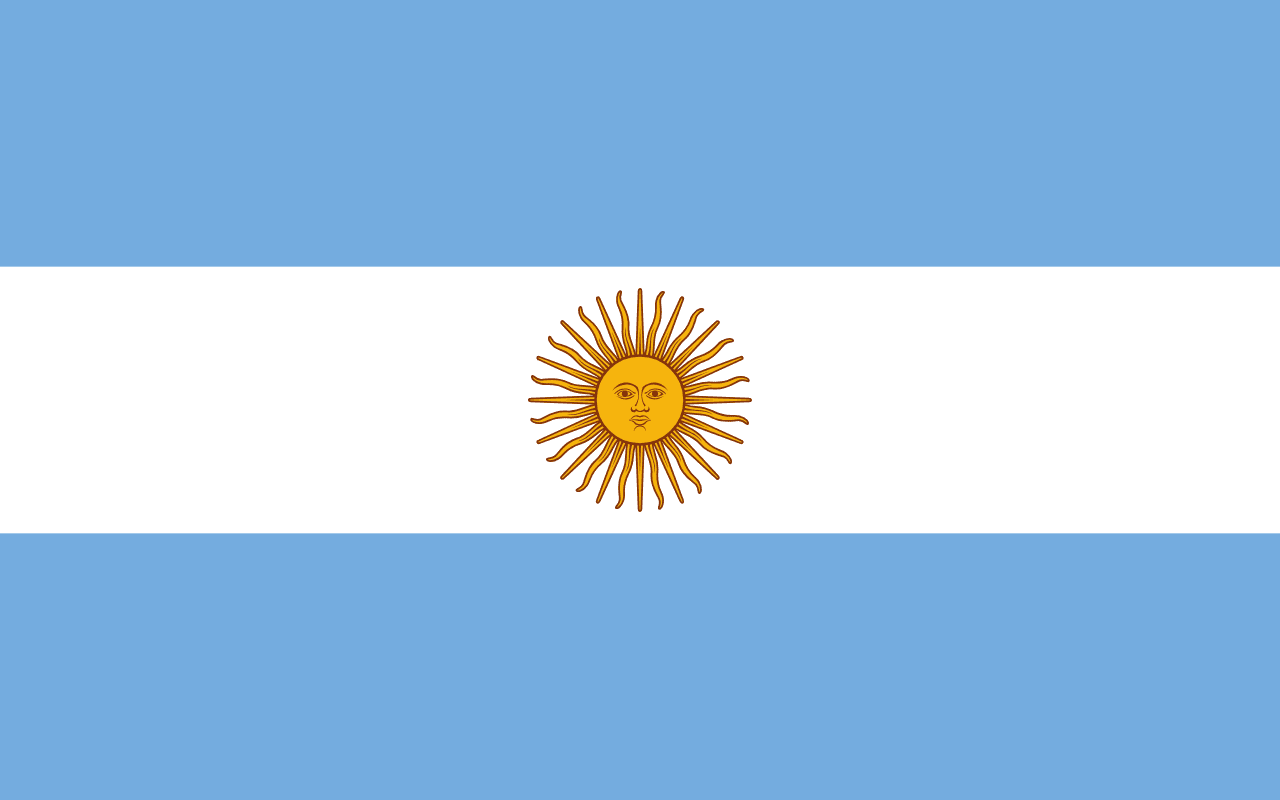
Introduction
— INTROOn 18 August 2016, in Rio de Janeiro, a team stood on the highest podium where by every logic it had no business standing. No professionals, no contracts, no national league you can live off, and yet Olympic gold, 4-2 against Belgium. Argentina became the first hockey nation to win Olympic gold for its country in the men's game, and did so as the only fully amateur team ever. Almost ten years later that same team carries a different burden: since the bronze of The Hague 2014 the World Cup podium has eluded it, and the golden generation has almost entirely departed.
This dossier portrays Los Leones on the way to the 2026 World Cup in Amstelveen and Wavre. It follows the paradox that defines Argentine hockey, an amateur nation that never quite let go of the world top but slid away from it heading into this World Cup, and the crossroads at which the team now stands: a generational shift under former captain Lucas Rey, built around a handful of veterans and a batch of young world champions, with the penalty corner as sharpest weapon. The central question is whether that generation, which starts the tournament as the lowest-ranked team of a punishing pool, can reclaim the World Cup podium that has eluded it since the bronze of The Hague 2014.
1. The position in 2026
— POS-01World ranking and qualification
Argentina travels to the World Cup as a fixture of the global top. The team was once ranked number one and never dropped out of the top ten after 2014, although that position slipped back in the run-up to the World Cup: in early 2026 Argentina was still fifth, but in August it begins the tournament as the lowest-ranked team in Pool A, behind the Netherlands. The FIH world ranking shows the current placing below.
| Country | Rank M | Points M |
|---|---|---|
| Argentina | #4 | 3,512.35 |
| Canada | #19 | 2,200.09 |
| Chile | #24 | 2,063.64 |
| United States | #27 | 1,960.11 |
| Mexico | #31 | 1,775.16 |
Qualification was convincing. Unlike the European powerhouses, who came in via the Pro League or the Euros, Argentina qualified as continental champion of the Americas: in August 2025 Los Leones won the Pan American Cup in Montevideo with a 10-0 in the final against the United States, their fifth continental title and the fourth in a row. At that continental level Argentina has for decades been the strongest without rival, the only team of the Americas with Olympic gold. The real yardstick lies elsewhere, and that yardstick is the World Cup.
2. Historical context
— HIST-02Every World Cup appearance by Argentina
Argentina played every edition of the World Cup since the first in 1971, with one exception. Only in 2014 did the podium come.
| Year | Host country | Placing | Result |
|---|---|---|---|
| 1971 | Barcelona, Spain | 10th | group stage |
| 1973 | Amstelveen, Netherlands | 9th | group stage |
| 1975 | Kuala Lumpur, Malaysia | 11th | classification round |
| 1978 | Buenos Aires, Argentina | 8th | classification round |
| 1982 | Bombay, India | 12th | classification round |
| 1986 | London, England | 6th | best result at the time |
| 1990 | Lahore, Pakistan | 9th | group stage |
| 1994 | Sydney, Australia | 7th | classification round |
| 1998 | Utrecht, Netherlands | not qualified | - |
| 2002 | Kuala Lumpur, Malaysia | 6th | classification round |
| 2006 | Mönchengladbach, Germany | 10th | group stage |
| 2010 | New Delhi, India | 7th | classification round |
| 2014 | The Hague, Netherlands | 3rd | bronze |
| 2018 | Bhubaneswar, India | 7th | quarter-final |
| 2023 | Bhubaneswar-Rourkela, India | 9th | crossover |
The major tournaments
The greatest prize falls outside this list. The Olympic gold of Rio 2016 remains the benchmark of Argentine men's hockey, achieved under Carlos "Chapa" Retegui, the most influential coach in the country's history. At the World Cup Argentina reached its furthest in The Hague 2014: bronze, after a lost semi-final and a won third-place match against England. Before and after there were continental titles in abundance and isolated international highlights, such as bronze at the 2008 Champions Trophy. The name Los Leones is younger than the successes: the team only adopted it in 2013, following the example of Las Leonas.
Recent editions
The last two World Cup editions show the flip side. In Bhubaneswar 2018 Argentina went out in the quarter-final and finished seventh. In 2023 it finished ninth, after a crossover that ended 5-5 and was lost on shoot-outs to South Korea. That pattern, strong in the group stage and vulnerable in a single knock-out, hangs like a shadow over the 2026 World Cup ambition.
3. The Rey era
— COACH-03Philosophy and approach
Whoever wants to understand Los Leones in 2026 begins with the name Rey. Lucas Rey took the helm in August 2024, succeeding Mariano Ronconi. He is no outsider: Rey played three Olympics himself, was captain at the birth of the name Los Leones in 2013 and at the World Cup bronze of 2014, and stood on the podium at Rio 2016. As a coach he led Argentina's under-21 to the junior world title of 2021. He chose this job deliberately: he turned down offers from Ireland and India, because coaching his own country is, in his words, the greatest thing that can happen to an Argentine.
His playing idea cannot be captured in a fixed model. Rey says he copies no blueprint, but seeks the DNA of Argentine hockey: an intense, fierce team that finds its own way. The concept on which everything rests he captures in an image that explains the whole team. The Argentine, Rey says, never drops their arms, not even at the worst moment. That is garra, the unyielding spirit that in Argentina is not a tactical concept but a character trait. Behind the scenes his staff is, by contrast, obsessively structured, with video analysis during the match and a ball cannon to drill the penalty corner defence, a professionalism that chafes with the amateur framework around it. None other than Retegui, his first coach when Rey was five, called him one of the best hockey coaches in the world.
Paris 2024: the end of a cycle and the legacy
Rey inherited a team in transition, for the era before it ended painfully. At the Paris 2024 Olympics, still under Ronconi, Argentina came fourth out of the group and lost the quarter-final 3-2 to world champion Germany. The wound lay in the detail: one of the German goals came from Gonzalo Peillat, the penalty corner specialist who won gold with Argentina at Rio 2016, then broke with the federation, had himself naturalised and went to play for Germany. He celebrated exuberantly against his native country. Argentina finished eighth, and a new cycle began. Rey took over that same month and immediately opted for rejuvenation, weaving the young world champions of 2021 together with the last veterans of 2016.
Pan American Cup 2025
The continental finals under Rey showed what the team can already do and what it still leans on. Argentina won the Pan American Cup 2025 in Montevideo almost flawlessly, with a 10-0 in the final against the USA and only one goal conceded in the whole tournament. Tomás Domene, with thirteen goals, became top scorer and player of the tournament. The flip side is that such figures mainly say something about the gap with the rest of the continent; the real test waits only in Amstelveen.
FIH Pro League 2025-26
In the Pro League, where Argentina does play the world top week in, week out, the picture was mixed. The team recorded memorable wins, including a 3-2 over host nation the Netherlands and a historic 8-0 against India, the country's biggest Pro League win ever, but also lost matches to Belgium and Germany. The season closed on 28 June 2026 with Belgium as champion and an Olympic ticket for Los Angeles 2028; Argentina finished fifth and Pakistan were relegated. The bright spot was Tomás Domene, who closed the competition as top scorer with 21 goals.
| Position | Team | Played | Points | Goal difference |
|---|---|---|---|---|
| 1 | Belgium | 16 | 42 | +32 |
| 2 | England | 16 | 35 | +19 |
| 3 | Australia | 16 | 30 | +9 |
| 4 | Netherlands | 16 | 26 | +10 |
| 5 | Argentina | 16 | 24 | +4 |
| 6 | Germany | 16 | 21 | -7 |
| 7 | Spain | 16 | 19 | -2 |
| 8 | India | 16 | 19 | -8 |
| 9 | Pakistan | 16 | 0 | -57 |
4. The team
— SQUAD-04The staff under Rey
Rey leads a technical staff that seeks the detail in everything, with its own sports psychologist and a training method in which every attack is reviewed on video. The team falls under the Confederación Argentina de Hockey, the federation that also governs Las Leonas and the youth squads. A special subplot runs through the family: Rey has openly said he wants to bring his brother Matías, the current captain, onto the staff after his playing career.
Training group 2025-26
The squad below is the definitive World Cup team that Lucas Rey announced on 14 July 2026: twenty field players, supplemented with five reserves. Caps are as of mid-2025.
| Surname | First name | Club | Position | Birth year | Caps |
|---|---|---|---|---|---|
| Santiago | Tomás | Herakles (BEL) | goalkeeper (GK) | ||
| Hernando | Nehuén | goalkeeper (GK) | |||
| Rey (C) | Matías | San Fernando (ARG) | midfield | 1984 | 319 |
| della Torre | Nicolás | KHC Dragons (BEL) | defence/mid | 1990 | 139 |
| Cicileo | Nicolás | Herakles (BEL) | defence | 1993 | 122 |
| Marcucci | Tadeo | Royal Orée (BEL) | defence | 2001 | 66 |
| Andreotti | Matías | defence | 2005 | 16 | |
| Ibarra | Ignacio | defence | |||
| Habif | Thomas | Mannheimer HC (GER) | midfield | 1996 | 109 |
| Méndez Pin | Lucio | Royal Orée (BEL) | midfield | 2000 | 30 |
| Ferreiro | Martín | Royal Orée (BEL) | midfield | ||
| Zárate | Facundo | midfield | |||
| Domene | Tomás | Waterloo Ducks (BEL) | attack | 1997 | 108 |
| Casella | Maico | La Gantoise (BEL) | attack | 1997 | 158 |
| Martínez | Lucas | KHC Dragons (BEL) | attack | 1993 | 161 |
| Toscani | Lucas | HC Klein Zwitserland (NED) | attack | 1999 | 85 |
| Toscani | Joaquín | HC Klein Zwitserland (NED) | attack | 2002 | 28 |
| Keenan | Nicolás | HC Klein Zwitserland (NED) | attack | ||
| Capurro | Bautista | Club Ciudad (ARG) | attack | 2003 | 57 |
| Ruiz | Tomás | Mitre (ARG) | attack | 2004 | 22 |
Reserves: Tobías Martins (goalkeeper), Iñaki Minadeo, Joaquín Ruiz, Facundo Sarto and Santiago Tarazona.
Five key players
Matías Rey is the iron foundation. The captain, at forty-one the only remaining player from the golden team of Rio 2016, goes to his sixth World Cup and passed the mark of 300 caps in 2025. He played fourteen seasons at Real Club de Polo in Barcelona before returning to Argentina in 2020. He slows the game when the opponent charges and speeds it up when the spaces open, and he is now coached by his older brother. The Rey family is synonymous with hockey in Argentina: a third brother, Emiliano, was also an international.
Tomás Domene is the sights. The striker from Córdoba, with Waterloo Ducks in Belgium since 2024, comes from a hockey family, scored four times in the historic 8-0 against India and was top scorer of both the Pan American Cup 2025 and the Pro League 2025-26, which he closed with 21 goals, and moreover became top scorer of the Belgian league. His drag flick is the weapon on which the whole attacking game can feed.
Maico Casella forms the second attacking beacon. The forward of Gantoise, developed at San Fernando, is a penalty corner and penalty stroke specialist and a cool finisher in the circle; he scored against Germany in the Paris 2024 quarter-final and shares the captaincy alongside Matías Rey.
Tomás Santiago is the conductor behind the team. The goalkeeper, the regular first choice since the run-up to Paris 2024, organises the defence with his voice and is feared in the shoot-outs, precisely the moment at which Argentina stumbled at the 2023 World Cup.
Bautista Capurro embodies the new batch. The young forward, junior world champion of 2021 and an Olympian in Paris at twenty, was told by the older players to keep playing "like a child", with the freedom and daring of youth.
Competition analysis by line
| Line | Certain | Contenders | Reserve / youth |
|---|---|---|---|
| Goalkeepers | Tomás Santiago | Gonzalo Yanello | Nehuén Hernando, Joaquín Ruiz |
| Defence | Nicolás della Torre, Tadeo Marcucci | Nicolás Cicileo, Iñaki Minadeo | Matías Andreotti |
| Midfield | Matías Rey (C), Thomas Habif | Santiago Tarazona, Lucio Méndez | Facundo Zárate |
| Attack | Tomás Domene, Maico Casella | Lucas Toscani, Bautista Capurro, Nicolás Keenan | Tomás Ruiz, Joaquín Toscani |
5. Tactical profile
— TACT-05The Rey system
Where the Dutch school dictates the tempo with patient positional play, Argentina opts for a game with more risk and more fire. Los Leones alternate between a compact, low block without the ball and lightning-quick, vertical transition the moment they win it. They watch for a sloppy cross-field pass or a poor first touch to hunt down the ball carrier with several players at once and force them to the sideline, and on losing the ball high up the pitch the nearest players press immediately instead of dropping back. This is not European discipline pasted onto the Argentine temperament, but garra itself, translated into a playing pattern: a team that does not wait for the prey to come within reach but goes after it. The flip side is that such a high, intense game gives away space when the first press is broken.
The penalty corner as a weapon
The sharpest weapon is the penalty corner. Argentina ranks among the world top in that discipline, with Domene as first drag flicker and della Torre as a dangerous second variant, and with finishers like Casella who coolly convert a rebound or a penalty stroke arising from a corner. In the Pro League 2025-26 a striking share of the Argentine output came from set pieces, with Domene as top scorer of the competition. For a team that does not always take control in open play against the best, that corner is often the difference between a draw and a win.
The honest balance
The realistic World Cup expectation also has its shadow sides, which lie within the team itself. The attacking threat leans heavily on a handful of individuals, with Domene as an almost indispensable pivot; if his corner falls silent, the whole output often stalls. The core is ageing, with Matías Rey at forty-one and della Torre in his thirties, while the young batch has talent but lacks international experience, as Rey himself acknowledges. And then there is the structural handicap: an amateur team scattered across all of Europe that, in Rey's own words, has little time to train with the whole group. Against the full-time programmes of the Netherlands, Belgium and Germany that is a disadvantage that can begin to weigh over the course of a tournament, certainly in the single knock-out in which Argentina has stumbled in recent years.
6. The rivals
— RIVAL-06Germany: the brother-in-law as executioner
No rivalry is as charged at this moment as the one with Germany. The reigning world champion knocked Argentina out at Paris 2024, and the symbol of that is Gonzalo Peillat, the former Leon who now takes Germany's penalty corners. The bond is almost uncomfortably intimate: Peillat is the brother-in-law of international Thomas Habif and his club teammate at Mannheim. The man who shot the Argentine dream to shreds in Paris is literally family.
The Netherlands: the host in the same pool
The Netherlands is a pool opponent from the outset and the toughest of all. Rey sees the Oranje team as a title contender that never finishes below third, with plenty of possession, a strong penalty corner and the home crowd behind them. Yet in the Pro League 2025-26 Argentina showed with a 3-2 that the host is vulnerable.
Belgium: the opponent of the golden moment
Belgium, co-host and for years among the global top, was the opponent in the golden final of Rio 2016. The Red Lions are a lasting benchmark for where Argentina stands.
Australia and the continental shadows
Australia, who beat Argentina 1-0 in the Paris 2024 group, remains a classic tormentor. Closer to home the USA and Canada are the main Pan American rivals, but the gap in level is large, witness the 10-0 and 9-1 at the Pan American Cup 2025.
Key players by rival
- Germany: Gonzalo Peillat (penalty corner), Niklas Wellen, the Grambusch brothers.
- The Netherlands: Thierry Brinkman, Koen Bijen, Tijmen Reyenga.
- Belgium: Arthur Van Doren, Tom Boon, Arthur De Sloover.
- New Zealand (pool): Nic Woods and the young Jonty Elmes, singled out by Rey.
7. The mentality of Argentine men's hockey
— MIND-07The mentality of Los Leones begins and ends with garra. The word is hard to translate, somewhere between fighting spirit, daring and a refusal to give up, and it is exactly what Rey means when he says that the Argentine never drops their arms, not even at the worst moment. It is, in his view, also the reason Argentines are so sought after in the European leagues: not for their system, but for their devotion.
That mentality feeds on amateur pride. Los Leones take pride in being the only fully amateur team ever to win Olympic gold, and that self-image gives a team without professional salaries an identity against the full-time powerhouses. That loyalty comes out most sharply in the figure of Peillat, the former teammate who chose Germany. Rey deliberately takes the high road on the matter and expresses no rancour: life sometimes leads people down different paths, he says, while in the same breath stressing his own gratitude to the Argentine shirt. In that calm dignity, and not in resentment, lies the mental anchor of this team.
8. How men's field hockey lives in Argentina
— CULT-08To understand Los Leones, you have to understand the amateurism. Unlike in Europe, Argentine hockey is not paid: players do not make a living from their sport and in fact pay their club to be allowed to play, from membership fees to equipment. Leonas legend Delfina Merino summed up the difference: in the Netherlands she got a contract and was paid, in Argentina it is exactly the other way round, and that is where the gap in level lies. The national players rely on grants from the state body ENARD, train on the pitch of the CeNARD in Buenos Aires, and travel to Europe every year for match rhythm and, for those who manage it, a paid club contract.
The roots lie with the British community that introduced the sport in the early twentieth century and founded the federation CAH in 1908. Hockey grew in the clubs of Buenos Aires, from San Fernando to GEBA and Banco Provincia, and only really became a national sport when Las Leonas broke through around 2000, a shadow in which the men's team has partly played ever since. The CeNARD pitch bears the name of Adriana Acosta, a hockey player who disappeared during the last military dictatorship, a reminder of how deeply this sport is interwoven with Argentine history. Under that amateur umbrella a serious talent engine does run: the federation operates a detection programme that guides young players from all over the country to the highest level with GPS data and a uniform methodology. It is precisely that pipeline, with the junior world title of 2021 as proof, on which Rey now builds.
9. The 2026 World Cup in Amstelveen and Wavre
— WK26-09The Wagener Stadium as pool base
Argentina plays its group stage at the Wagener Stadium in Amstelveen, the beating heart of Dutch hockey and thereby, in Pool A, above all the home bastion of a direct opponent. The World Cup runs from 15 to 30 August 2026 across two venues, Amstelveen and Belgian Wavre, with the men's final on Sunday 30 August in Wavre. In preparation the team trained in Antwerp in the spring and closed at the end of July with a training camp in Rosario, before the squad travelled to Europe in early August.
Pool A and the tournament format
Argentina is in Pool A with host nation the Netherlands, New Zealand and Japan and opens on Sunday 16 August against Japan, followed by the blockbuster against the Netherlands on Tuesday 18 August and the clash with New Zealand on Thursday 20 August. The tournament has four pools of four; the best two per pool advance to a second group stage, in which points against fellow qualifiers count, and only then follow the semi-finals and the medal matches. As the lowest-ranked team in the pool, Rey's explicit goal is to reach the top eight, that is, to reach that second round.
Amstelveen, Nederland
Standings
| # | Team | P | W | D | L | GF | GA | GD | Pts |
|---|---|---|---|---|---|---|---|---|---|
| 1 | NED | 3 | 3 | 0 | 0 | 12 | 3 | +9 | 9 |
| 2 | ARG | 3 | 2 | 0 | 1 | 11 | 4 | +7 | 6 |
| 3 | NZL | 3 | 1 | 0 | 2 | 4 | 12 | -8 | 3 |
| 4 | JPN | 3 | 0 | 0 | 3 | 1 | 9 | -8 | 0 |
Argentina finished 2nd in Pool A and play in Pool E in phase 2. Their new opponents come from Pool D: England (1st) and India (2nd). Pool rival Netherlands (1st in Pool A) is also in Pool E; that match was already played in phase 1. Pool E competes for places 1 to 8, with the top two reaching the semifinals.
Standings
| # | Team | P | W | D | L | GF | GA | GD | Pts |
|---|---|---|---|---|---|---|---|---|---|
| 1 | NED | 3 | 2 | 1 | 0 | 8 | 4 | +4 | 7 |
| 2 | ARG | 3 | 2 | 0 | 1 | 9 | 7 | +2 | 6 |
| 3 | ENG | 3 | 1 | 1 | 1 | 7 | 7 | 0 | 4 |
| 4 | IND | 3 | 0 | 0 | 3 | 6 | 12 | -6 | 0 |
Scenario analysis: the road to the final
The pool decides everything. In the favourable scenario Argentina uses the opening match against the lower-ranked Japan, which Rey describes as physical and defensively organised with aggressive transition, as a springboard, takes a result against the emerging, physical New Zealand and survives against the Netherlands, which secures the second round. In the unfavourable scenario that very tough trio costs the team the points and Argentina finishes third or fourth in the pool, resulting in an early exit. And even with a good group stage, the reunion with Germany, and with Peillat, looms further on as a decisive obstacle.
10. Viewing tips for the 2026 World Cup
— WATCH-101. Domene at the penalty corner. The team's sharpest weapon. On every Argentine corner, watch the first drag flick of top scorer Tomás Domene; it was no accident that he was top scorer of both the Pan American Cup and the Pro League. If the first attempt misses, watch the rebound, because there he is deadly.
2. The second variant via della Torre. When the first option is defended, the ball often slides to Nicolás della Torre, whose drag flick through the other corner is hard to read. Argentina's penalty corner is rarely a single shot, but a pattern.
3. The Rey brothers. A unique sight: head coach Lucas on the touchline, and on the pitch his brother Matías as captain, the only remaining gold winner from Rio 2016. Watch how Matías controls the tempo in the moments when the team is under pressure.
4. The opening match against Japan. For the top eight, the first match is crucial. Japan is fast and defensively organised; watch whether Argentina can break open the low block early before the Japanese can dig in.
5. Argentina against the Netherlands. The pool blockbuster, in a packed Wagener against the host nation. After the 3-2 in the Pro League Argentina knows it can be done, but the home crowd and the Dutch penalty corner make this the toughest test.
6. The garra in the closing phase. Watch the final minutes of a close match. Argentina is known for not dropping its arms; precisely when things go against them the fierce, high press for which the team is known breaks loose.
7. The young batch. Players like Bautista Capurro, Tadeo Marcucci and Tomás Ruiz carry the future. They cover the hard yards in transition and, with their runs, pull open space for Domene and Casella.
8. A possible reunion with Peillat. Should Argentina meet Germany further on, there is the former Leon and brother-in-law of Thomas Habif at the German penalty corner. Few matches carry so much personal weight.
Historical highlights
— HIST2008
Rotterdam: bronze at the Champions Trophy
Bronze at the Champions Trophy, in coach Retegui's first period.
2013
Johor Bahru: the name Los Leones
The team adopts the name Los Leones, following Las Leonas.
2014
The Hague: World Cup bronze
World Cup bronze, the best World Cup result ever, with a win over England in the third-place match.
2015
Toronto: gold at the Pan American Games
Gold at the Pan American Games.
2016
Rio de Janeiro: Olympic gold
Olympic gold, 4-2 against Belgium, Argentina's first Olympic hockey title.
2017
Number one on the FIH world ranking
The team reaches first place on the FIH world ranking for the first time.
2018
Bhubaneswar: World Cup quarter-final
World Cup quarter-final, finishes seventh.
2019
Lima: gold at the Pan American Games
Gold again at the Pan American Games.
2021
Bhubaneswar: junior world title
Argentina's under-21 becomes world champion, under coach Lucas Rey.
2023
Santiago: gold at the Pan American Games
Gold at the Pan American Games, the last highlight of the Ronconi era.
2024
Paris: quarter-final elimination
Quarter-final elimination against Germany and Peillat; Argentina finishes eighth.
2025
Montevideo: Pan American Cup win
Win at the Pan American Cup, 10-0 in the final against the USA, and the World Cup ticket.
Closing
— CLOSEThe 2026 World Cup will be the litmus test of the generational shift. Three outcome scenarios take shape. In the finest, Los Leones return to a World Cup podium after twelve years, carried by Domene's corner, the garra and the composure of Matías Rey, and the team finally breaks the pattern of stumbling in the knock-out. In the most likely unfavourable scenario the punishing pool costs the team too much, and the tournament ends after the first round. And in the scenario that hits hardest, Argentina goes out further on against Germany, with Peillat as the returning ghost of Paris.
Whatever the result, on Sunday 30 August in Wavre more is at stake than a place on the ranking. Argentina remains the exception that world hockey cannot quite explain: an amateur nation that will not let go of the top, a team that draws its identity from unyieldingness rather than from resources. The golden generation of Rio has almost entirely departed, the world ranking has slipped away and Argentina begins as the lowest-ranked in its pool. The question of this World Cup is whether the generation after, under a coach who stood on that podium himself, can find the way back. The benchmark remains The Hague 2014, the last World Cup podium. Only when that is matched is the circle complete.
Sources
— SRCOfficial sources
- FIH, rankings, 2026 World Cup, Pro League.
- Confederación Argentina de Hockey, squad, staff, match reports.
- Pan American Hockey Federation, Pan American Cup 2025.
- Olympics.com, World Cup draw and Paris 2024.
- hockeyworldcup2026.nl, World Cup information.